Thursday, 27 February 2020

Mongolian Grill

A couple of weeks ago, I had the opportunity to meet some friends and the chosen place was one I wanted to visit for a long time ago. The name, Genghis Khan Mongolian Grill. Many people just refer to this place as Mongolian Grill.

This place is an all you can eat restaurant that offers a unique selection that includes meats, vegetables, desserts, and fruits.

But Mongolian Grill is not like other buffet-style restaurants that offer a selection of prepared foods, but this restaurant also offers a different buffet where you can pick your own ingredients, as much as you like and combine them how you want while their staff of specialized chefs will cook them immediately for you.  Their chocolate fountain is also something we must mention about this place that offers an extraordinary experience with Asian cuisine.  


Pictures will tell you the rest of the tale. Enjoy them: 


 Prepared food from the Buffet


  Meat and Dumplings


Meets to be cooked, you can choose between beef, pork, lamb, chicken


Chefs in Action!!!


Food cooked from scratch. I love this combination. 


 With my friends 


Friday, 3 January 2020

Taiwan Style Fried Chicken

In March of last year, I published an article about Eating Chicken in Toronto. For this article, I made a selection of different places and their styles to prepare Chicken. But the Food movement in Toronto is always changing and it is very difficult to cover it all in one single article. When I was hanging out with Anna, she showed me a different place, where chicken is prepared as in Monga, Taiwan. Honoring this place, the restaurant adopted the name “Monga Fried Chicken” 

Fried Chicken is one of the most popular snack foods in Taiwan. Monga Fried chicken consists of chicken fillets marinated with honey and dipped in batter and fried. The idea of thick pieces is to keep the juices even when it is fried at high temperatures.  In this place, the Monga chicken is presented in 5 flavors: in the picture below, we can see one of our selections: Misty Chicken accompanied with Large fries and Fruit juice (we recommend to try their selection of natural juices.


We tried the Chee-z, a chicken fillet with a slightly spicy flavor and covered by melted cheese. I loved this one.


But following the Chinese tradition, they offer also a selection of Baobao (from Mandarin, Bāozi or 包子 which is the name of the steam stuffed bun). I decided to try the classic version, filled with pork belly and pickled vegetables.


Anna and I, enjoying a nice meal. Thanks for the suggestion


Thursday, 26 December 2019

Unusual Meats in Unusual Recipes!

I dedicated most of this blog to existent restaurants and ethnic foods. At some points, I had the opportunity to show some dishes made by me. Today, I am going to dedicate this article to some experiments I made in the kitchen during this year, which is about to end.

One day, I decided to prepare pasta with minced meat. Most of the recipes for pasta, I learned them from an Italian family. When I prepare pasta, I usually cook the meat with onions, basil, salt and pepper (I sometimes add garlic as well). But unlike the recipes of my masters, this time I decided to prepare my pasta with a slightly different meat….


For this dish, I used ostrich meat. This meat is lean and very rich in iron. It is red and tastes very different from chicken and to any other poultry meat. Because it has almost no fat you have to be very careful not to overcook it. But it shows to be an ideal meat for pasta dishes.


On a separate occasion, I was checking some recipes. I spotted a simple recipe to make Fesenjoon, a Persian stew flavored with pomegranate and ground walnuts. This dish is usually prepared with chicken or duck and served with rice. I decided to follow the instructions of the recipe and prepare it, but I decided to use slightly different meat this time…..


For this dish, I used Crocodile meat. This meat is a source of high-quality protein and very low in fat. It has a similar taste to chicken. If you go for an alligator, the flavor can be a little bit fishy. Although much more expensive, it can be an excellent substitute for chicken.  


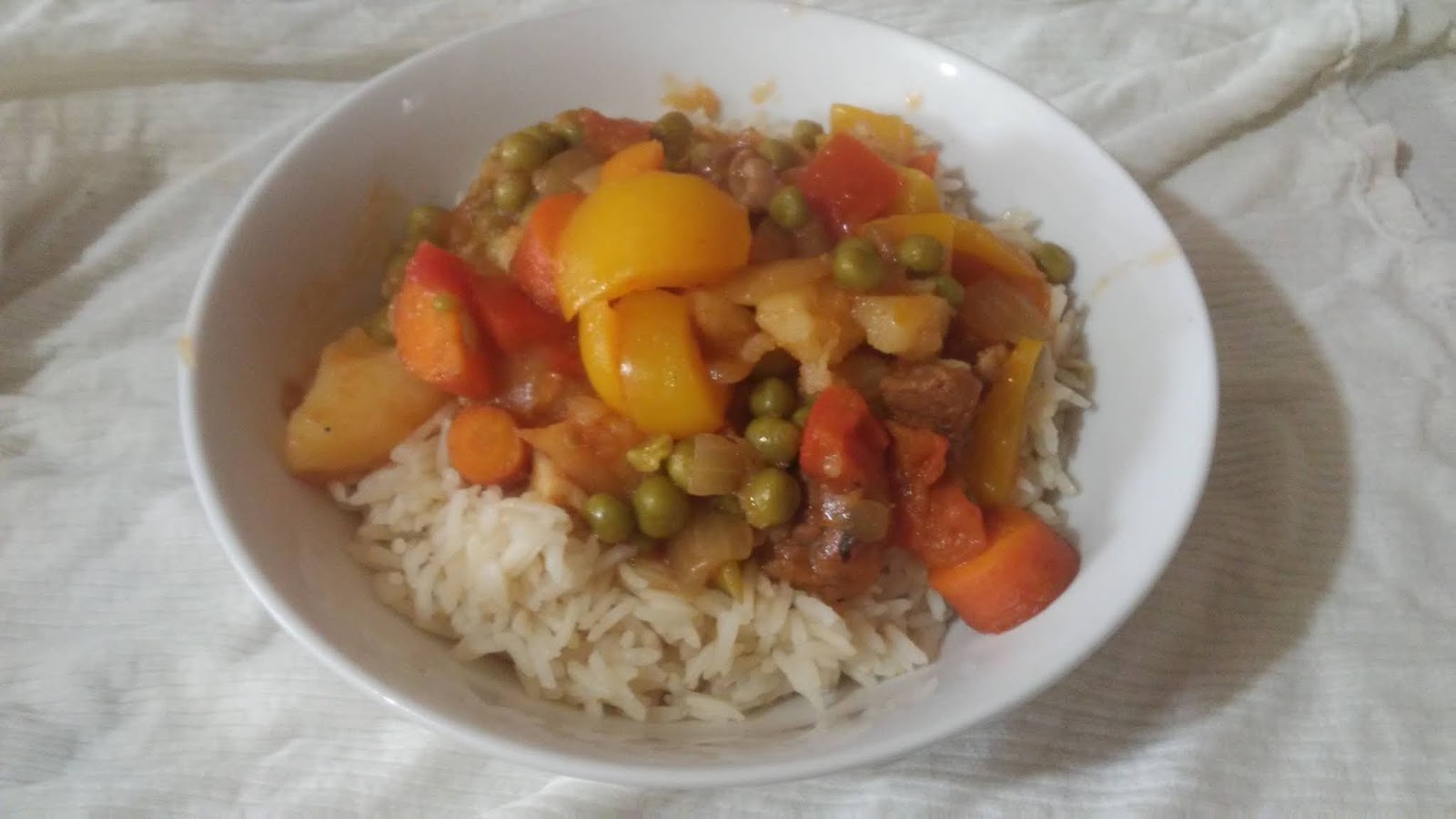
One day, I was in the mode of Asian Cuisine. I spotted a recipe to prepare Kaldereta, a goat meat stew from the Philippines.  The meat is commonly stewed with vegetables and liver paste. It usually includes potatoes, bell peppers and sometimes tomatoes. If you do not want to use goat, you can substitute with beef, chicken or pork. But, what about if you want something different? That was the path I decided to follow.


I cooked my Kaldereta using Camel meat. Camel meat tastes like lamb. Although I read some pages saying that it is quite hard meat, at least in my case I found it very tender. It has less fat than other red meats.


Different experiences with different meats. What a great learning experience for an amateur chef like me. BTW, I cannot stop mention where I found those meats in case you want to try and experience new recipes.  The meats were bought in Whitehousemeats  in St. Lawrence Market. You can find these and other uncommon game meats in this store.   


Thursday, 21 November 2019

Brunch, Autochthonous Style

A couple of weeks ago, while researching indigenous cuisine for homework, I spotted a place in Toronto that works with this kind of food. But their way of work is quite different from other restaurants. I decided to visit this place.

The place I am talking about is NishDish Marketeria& Catering.  You can find more information on their website. NishDish is a business built on traditional Anishinaabe food (Here the meaning of Nish). The ingredients are sourced locally from many different First Nations communities. The Menu regularly rotates and is based in the traditional indigenous food. Right now, they focus on their “all-day brunch” during the weekends.

The first meal was an omelet with boar bacon. A few grains of wild rice and berries were added. An interesting option for a breakfast


Venison sausages with wild rice. A fresh salad using local ingredients was used as a dish side.   


Bannock, the typical bread made by local indigenous. With a homemade flavor and warmed with butter. 


Cornbread with a side of berry jam.


I had cedar tea with all my meals. For our indigenous, the use of Cedar leaves is related to balance and positive energy. There are other options of coffee and tea as well, usually sourced from local First Nations communities.

I do not often have breakfast outside my home. But I feel that this brunch was a good choice. Healthy good locally grown, with an outstanding combination of flavors, very simple and very affordable. the place is not big so for a friend gathering I would recommend their gathering option. But an outstanding experience if you go with a partner or a friend.    


Sunday, 22 September 2019

Korean Food

Since I came to Canada, I visited different sites of Korean food. In fact, the very first restaurant I visited since I came to this country was a Korean restaurant, where some friends invited me. Although I became a fan of Korean food, since I started to blog, I could not decide to post about which place.

The answer to my question came through a good friend, Anna. She is also a fan of Korean food, but fortunately, much more determined than me. She asked me to go with her to Huhgane, a place of Korean food in Finch ave, just west of Yonge st. Anna not only guided me to the menu, but she also prepared the pictures I am sharing with you now.

Every Korean meal in a restaurant starts a group of collective small side dishes that include Kimchi, vegetables and sometimes cold noodles. A later research leads me to the name of this: a Banchan (반찬), this is a group of dishes that traditionally are served with cooked rice. They do not include meat and the number of dishes can be 3, 5, 7 or 9 (We were served 7 as we can see in the picture).

Our first election was Deok Man Du (뚝만두). Where the word Mandu (만두) is the Korean word for dumplings (curiously a similar word for dumplings is used by Turkish and Uyghurs).  Deok ManDu is a soup of dumplings, rice cake, and vegetables. The dumplings were filled with meat. There were pieces of brisket also. This soup is special for those who do not want spicy or very salty food. I recommend it for cold weather.


Another dish that we had was the iconic Bibimbap (비빔밥) hot steamed rice with beef, a fried egg, vegetables, and a Korean sauce. It is served in a heated stone bowl. This is one of the best known Korean dishes in the world.


Bibimbap


We had also a Chicken Gaseu (I found this name in Korean “치킨가스”) which is actually a name of English origin. This is a deep pan-fried chicken with a spicy sauce. This dish is a signature dish of this restaurant where the sauce is made by the restaurant. I recommend this dish for lovers of spicy fried chicken. The chicken was very juicy.


Anna and I eating our Deuk Mandu. at the center, we have our Banchan, then at the right corner we can see some friend dumplings.at the extreme left, we can see the Chicken Gaseu.


As a side dish, we had Korean purple rice. In Korean, you can find this dish with the name “Heukmi Bap” (흑미밥), which is scarlet glutinous rice. It can be found in many Asian grocery stores. It is served with grains (like beans, corn) and pork. It has a special flavor. During my research, I found articles where they talk about the health benefits of this rice.


Deuk Mandu at the left and Heukmi Bap at right. We can see another view of our Banchan.


Thanks, Anna!

I finish this article with a picture of one of my favorite Korean dishes, the Ori-tang (오리탕) which is a Duck soup with chili. You can find this same dish in this restaurant, but my picture was taken in a different restaurant. Lim Ga Ne restaurant in Bloor st (Koreatown)     


Monday, 2 September 2019

Canadian Dishes

To celebrate my citizenship, I decided to taste some dishes from Canada. Here is what I had.

If we ask about a typical Canadian Dish, very often the answer will be “Poutine”. This is a dish that includes French fries and cheese curds topped with brown gravy. This dish originated in the province of Québec. I include an old picture of poutine that I ate in Montreal in the famous restaurant La Banquise just for information to my readers who do not live in Canada.


A variation of Poutine

This weekend, I visited a restaurant called Le Papillon on Front Street. This the restaurant specializes in French food and the cuisine from Québec.

The main dish I ate was Tourtière, a meat pie originated from the province of Québec. The meat is usually a mix of minced veal, beef, and pork with potatoes. This dish is exclusive French Canadian and there are variations that exist among other French Canadian groups. We can find also the tourtière du Lac-Saint-Jean and the pâte à la viande.  


I had Escargots as an hors d’oeuvre (starter). These are edible land snails. This restaurant serves it in garlic parsley butter. This is not really a Canadian dish but a popular French dish. 


My dessert was Pouding Chômeur, a popular dish from Québec.  This is a cake batter with hot caramel syrup that is poured before baking. It is served with a vanilla ice cream. The name of the dish, Pouding Chômeur is translated as “unemployed man pudding”. According to the Canadian Encyclopedia this dish was created by female factory workers during the Great depression in Québec, with the idea of having a simple dessert with few ingredients in a time of economic hard times.


Later on, when I went to the CNE, I had to opportunity to see and taste bannock. This is a variety of flatbread baked from grain. According to the Canadian Encyclopedia, the name Bannock is from Old English bannuc and this from Gaelic bannach.  The version that we know came from Scotland. Different indigenous groups in Canada adapted to their own cuisine and they use it in gatherings and festivals. It is deep-fried or baked. The kind of bannock that I tasted was the indigenous one from northern Ontario.


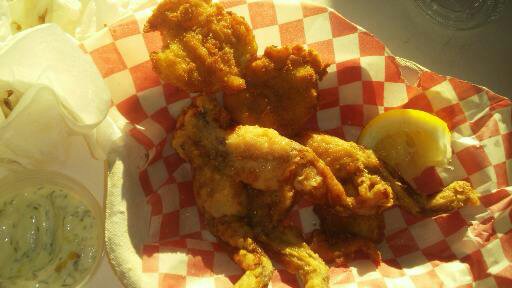
There are other famous foods that are Canadian. We have the Montreal style bagels, the California roll (Created in Vancouver), beaver´s tails, maple syrup, and Nanaimo bars. Here is an old picture of fried cod tongues, a popular dish from Newfoundland.    


Sunday, 18 August 2019

Xinjiang – Uyghur Food

Recently, while visiting a street festival in Toronto, I was delighted to find a stand of Uyghur food. After the event, I decided to research more about possible places where I can taste Uyghur food in Toronto.

Uyghurs are a minority Turkic ethnic group that mainly live in China in a region called Xinjiang. Their food is a mixture of Central Asian Turkic and Chinese influences.  Kebabs and fried rice coexist. Hand-pulled noodles are common. The most common meat is lamb. Spicy food is common. Because the majority of Uyghurs are Muslims, the food is typically Halal.    
I found a few restaurants. I decided to visit two of them. Here is what I found:

Kroran

Kroran is a typical Uyghur restaurant located in East Toronto. Their menu is very simple but is very traditional. The name “Kroran” or “کروران “ (In Mandarin “Lóulán” = 楼兰 ) was an ancient kingdom located in today’s Xinjiang Autonomous Region in China. It was a key point of the ancient Silk Road.  

The first order was a “Kroran Lengmen” (楼兰过油肉拌面 = Noodles with stir-fried meat). The name suggests stir-fried meat with noodles Kroran style. Lengmen can be found using the names “ له‌گمه‌ن “ that might be derived from Chinese 拉面 that is the name given to the hand-pulled noodles.   


 It has handmade hand-pulled freshly made noodles, with stir-fried lamb and vegetables.  Among the vegetables, they used carrots, peppers, chilies, and cabbage. A truly Uyghur experience.

I ordered a Ziq Kawap. This name is another transliteration of the famous Shish Kabab and is prepared seasoned with cumin and chili powder. It is served with Nan bread. This is one of their most popular dishes.


 Zip Kawap


Xin Jiang Restaurant
  
Xin Jiang Restaurant also serves Uyghur food. But its style reflects the presence of other ethnicities that coexist in this region and the Chinese influence over the food. They also serve Halal meat, but the variety of dishes is reflected in a larger menu.
A typical dish from the area is the Lamb soup. I decided on one.  


It is prepared with noodles and green vegetables. Later, after reading the name of the dish in Chinese (回民羊肉粉汤), I realized that the style of the soup is from the Hui people, a minority group of Chinese origin, who speak in Mandarin but follow the Islamic faith. Because they follow the Halal rules, their food has some Turkic and Central Asian influence.

I ate a fried rice Xinjiang style, a dish where the mixes of eastern western influences coexist (新疆特色炒飯). The typical Chinese fried rice with eggs and beans, but with carrots and almonds, ingredients that are commonly found in the local pilaf rice. The meat used was ox meat.  


Xinjiang Fried Rice 


Tea served like in a Chaikhane